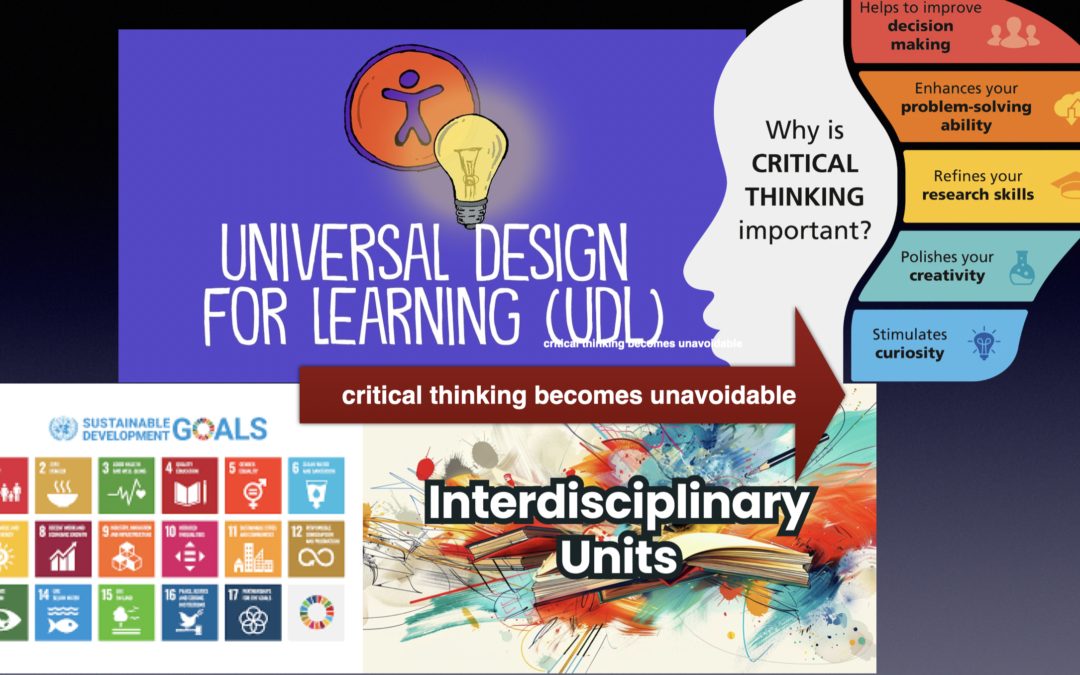
CRITICAL THINKING with Universal Design for Learning (UDL).
In my last post, I suggested that perhaps we’re asking the wrong question.
Instead of asking, “How do we teach critical thinking?”, we should be asking:
“How do we design learning experiences in which critical thinking becomes unavoidable?”
Here’s an example.
Year 8 Interdisciplinary Unit
The Future of Water: Who Gets What and Why?
(Linked to UN Sustainable Development Goal 6: Clean Water and Sanitation)
Rather than teaching critical thinking as a separate lesson, students investigate a real-world problem:
Should a growing community facing water shortages prioritise households, agriculture, industry, or environmental sustainability?