CEO’s tell us – so listen!

CEO’s tell us – so listen!

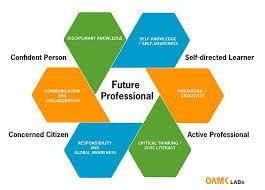
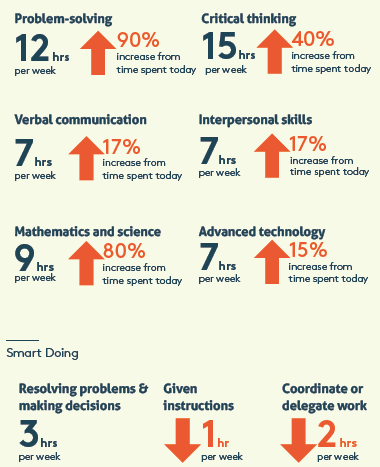
To prosper in this new work context, young people will need to be equipped with skills, mindsets and capabilities to respond and adapt to shifting occupational landscapes, and to be able to work across several industries. They will need to be lifelong learners who are curious, adaptable, autonomous, driven, self-disciplined, confident and have competency across these skillsets:

  • Foundational skills: literacy, language and numeracy.
  • Technical skills: skills related to particular disciplines such as science, technology, engineering, mathematics and humanities.
  • Enterprise skills: creativity, problem-solving abilities, critical thinking and digital literacy, financial literacy, project- management, the ability to work in a team, communication and global citizenship.
  • Career management skills: it is predicted that young people will need to work up to 17 jobs across five industries to adequately support themselves. A linear career trajectory will not be the norm.
While the world changes quickly, education typically moves quite slowly.

While the world changes quickly, education typically moves quite slowly.

The biggest challenge for education today is breaking out of the current paradigm — the idea that 1000 hours of school class‐time each year is worth far more than the 4800 waking hours each year a kid spends out of class, as though it’s only what happens in class that’s relevant. That’s just ridiculous. We need to move to “anywhere, anytime learning,” especially as kids start demonstrating a bit more independence, responsibility and autonomy — just as they’ll have to when they leave school.’
Time to Ditch Reports

Time to Ditch Reports

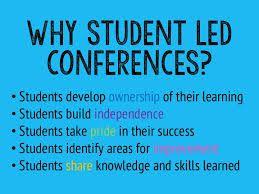
The written school report and the parent-teacher interviews are products of another era when we didn’t have access to the internet and emails. Every school has their own version of the report, which can provide a lot of information or sometimes little information about a child’s progress. Then there’s the parent-teacher interview, which, in some cases, can be education’s version of speed-dating. These communication channels are usually dominated by one voice: the teacher’s.