
A Future Model of Education
Bottom line, how we educate our kids needs to radically change given the massive potential of exponential tech (e.g. artificial intelligence and virtual reality).
Bottom line, how we educate our kids needs to radically change given the massive potential of exponential tech (e.g. artificial intelligence and virtual reality).
To meet these goals many are focused on blended-learning, project-based learning, personal learning. Yet, if you move beyond the labels and talk about instructional practices that promote learning and how they move us toward the desired outcomes for learners, we begin to see that our beliefs and experiences don’t always translate to our practices.
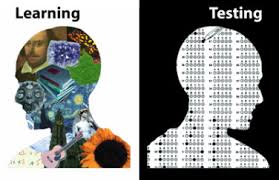
PISA successfully marketed itself as a measure of educational quality with the claim to measure skills and knowledge that matters in modern economies and in the future world. Upon closer examination, the excellence defined by PISA is but an illusion, a manufactured claim without any empirical evidence. Furthermore, PISA implies a monolithic and espouses a distorted and narrow view of purpose for all education systems in the world. The consequence is a trend of global homogenisation of education and celebration of authoritarian education systems for their high PISA scores, while ignoring the negative consequences on important human attributes and local cultures of such systems.
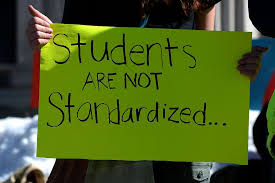
Teachers have said, repeatedly, that standardised tests don’t measure what they claim to measure, and that the educational process in schools is being narrowed and weakened in order to focus on testing. Teachers have also said, that the Big Standardised Tests are a waste of time and money and not helping students get an education. Teachers have been saying it over and over and over again. In return teachers have been told, “You are just afraid of accountability” and “These tests will finally keep you honest.” WRONG!

Schools are facing a looming teacher shortage and they are finding the quality of graduates from teaching degrees “somewhat unpredictable”. What is the answer?