Towards a Creative Future
A lot of things we do because it’s the way we’ve always done it but what is education for? Is it for the admin team or is it for the children?
Time is the ‘first technology’ because it is the most controlling of all the structures which define ‘school’. Learning is, of course, timeless. It exists in its own temporal zone, unique to each individual, and different for each thing ‘learned’. But school is all about the clock.
Swinburne University is moving to remove grades from some core sections of its design degree, saying students’ focus on high marks was stifling the creative process.
The issue of innovation, and entrepreneurialism, is a little like the issue of class size. Over the past few decades huge amounts of money have been spent to reduce class sizes with little to no positive effect on student learning. This is because, again, if you don’t change the activity with the change to the environment you have wasted the money.
Predicting the skills necessary for future jobs begins with the obvious problem of specifying skills for jobs that do not currently exist. The World Economic Forum estimates that ‘up to 65 per cent of children entering primary school today are likely to work in jobs that do not yet exist’ . In fact, ‘it is much easier to accurately identify the jobs that will be destroyed by technological change than it is to predict those that will be created in the future’ . Some economists have shown that while this structural change has been occurring in the types of skills needed in the workplace, this has not reduced levels of employment, so that ‘the new labour saving technologies did not reduce the demand for labour’. See the attached report for the new 100 skilled jobs predicted for the future!
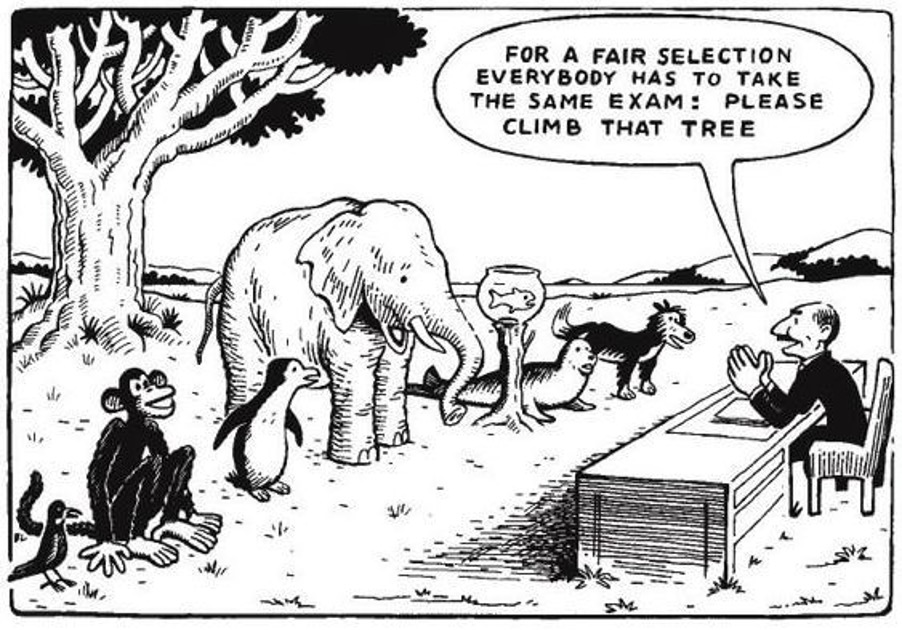
Today’s grades were developed as part of a particular approach to schooling that emerged with universal participation, large classes and the desire to treat all students equally. Under this approach, all students move along the same curriculum ‘conveyor belt’ at the same pace; are delivered the same year-level curriculum at the same time; and are then graded for performance before all moving to the next year’s curriculum. On production lines, the grading of products is a common feature of the production process. The problem is that learning is not like this. Instead, it is a continuous, ongoing process.